Since Lent, our entire family has been enraptured with song, “Last Words (Tenebrae)” by Andrew Peterson. It’s a song so powerful it literally brings tears to the eyes, and leaves even our kids requesting to listen again.
Tenebrae (Latin for “darkness”), refers to a Christian service during the week leading up to Easter, often involving the gradual extinguishing of candles. The Last Words refer to the 7 last sentences Jesus spoke as he was crucified on the cross. Hearing his own words sung in a round is musically mesmerizing, and strikes you with the gravity of all that he came to accomplish during his earthly ministry.
He was the mediator who came to offer forgiveness:
Father, forgive them, for they know not what they do Forgive them, they know not what they do
He was the Messiah who came to save:
Today you will be with me in Paradise You will be with me today
He was a child who came to model compassion and serve:
Behold your son, behold your mother, behold your son
He was a Son who willingly endured abandonment from his Father:
My God, my God, why have you forsaken me? Why have you forsaken me?
He was a human who suffered pain:
I thirst, I thirst
He is the Messiah who volunteered his life as a sacrifice:
It is finished, it is finished
Father, into your hands, into your hands I commit my spirit
Luke 23:34, Luke 23:43, John 19:26, Mark 15:34, John 19:28, John 19:30, Luke 23:46
Our visit to Disneyland had finally come. We aren’t Disney fanatics, but wanted our kids to experience the park at least once growing up. Arriving the day before, and taking the obligatory swim in the hotel pool, we headed for an evening stroll through Disney Downtown to get a feel for the Disney magic before hitting the park in earnest the following day.
It was a short walk to the entrance, passing hotel after touristy hotel down the busy street, one family amongst dozens, all headed in the same direction. Our parent radar was up, ensuring the kids kept pace.
“Get your ears here. Only $5. You’ll pay $15 inside the park!” the jovial street vendor warned. Time was short and I wanted to see the park. We bustled past a man holding a homemade cardboard sign, asking for assistance and wishing all passers by God’s blessing. The gates were within sight. “Heads down! Stay focused! Come on!” I pleaded with the family.
It was fair warning for what we’d be enduring the next day.
As the Disney music filled the air, we made our way under street lamps through the downtown shopping area. There were families everywhere, battling with overly tired and overly stimulated kids, strollers full of Disney and Star Wars trinkets. It was fair warning for what we’d be enduring the next day. A juggler performed for a sizable crowd; further down a jazz band was taking the stage for a nightcap performance.
We enjoyed window shopping, ducking in and out of a handful of interesting stores. In the back of my mind I kept hearing that great Spaceballs line, “Merchandising, merchandising, where the real money from the movie is made…. Spaceballs—the breakfast cereal. Spaceballs—the flame thrower!”
Then it was time for the reverse trip, back to the hotel, to make sure we were ready and rested for the big day. A military vet and his son were asking for handouts, and the familiar street vendors were repeating their same spiel.
Getting the whole family to sleep in the same hotel room isn’t easy. Sprinkle in the anticipation of a fun outing the next day, and we weren’t sure anyone was going to sleep.
With the lights off and hotel air conditioning on full blast, our eldest stumbled through the dark and wanted to talk, clearly troubled. My wife ushered him into the bathroom so she could turn on a light without waking the others. Through moist eyes, he poured out his heart.
“It isn’t fair. How can there be people without a place to sleep, begging on the street, while everyone’s spending hundreds of dollars to get into Disneyland?”
Platitudes and nuanced answers weren’t going to suffice. I wasn’t able to hear my wife’s answer, but prayed she’d have wisdom to respond.
Nothing more was said, but I was convicted.
The next morning, we slathered ourselves in sunscreen, threw on our backpacks, and walked the same route back to the park entrance. This time, our son was armed with packs of food to distribute to those asking for help.
As we passed each person with a sign, he silently walked over, gave them a package of cheese and crackers, and rejoined the masses headed for the gates. Eventually his food stash was empty and we were at the entrance.
Nothing more was said, but I was convicted.
How had my heart become so calloused that I could walk right by and not feel pain? Why was my first instinct to avoid eye contact with those along the street? Why did I question the motives of those asking for help? When did I learn to rationalize a lack of response?
At that time the disciples came to Jesus, saying, “Who is the greatest in the kingdom of heaven?” And calling to him a child, he put him in the midst of them and said, “Truly, I say to you, unless you turn and become like children, you will never enter the kingdom of heaven. Whoever humbles himself like this child is the greatest in the kingdom of heaven. (Matthew 18:1-4)
On this trip it wasn’t the magical world of Disney’s kingdom that captured my heart, but the eyes and heart of my son, demonstrating to me true faith and humility.
“Should we get a dog?” We’d been married for a few years. I’d loved our family dog growing up, so it seemed natural to me. And yet, I was hesitant. The main reason I gave for not wanting a dog was the fear of having to one day say good-bye.
It’s 16 years later, and that moment just came.
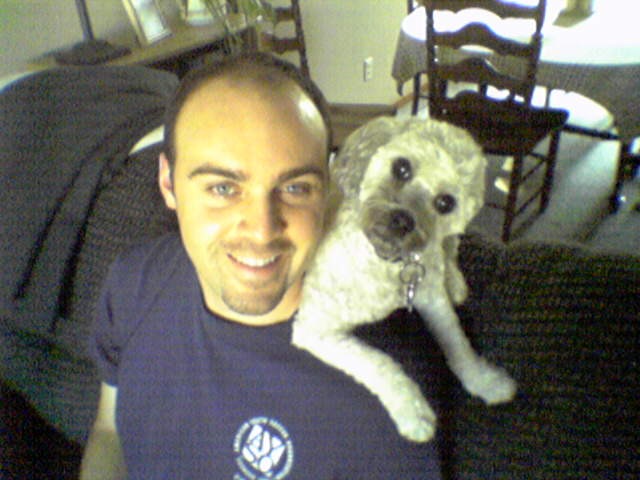
We got Moby in 2001 as a puppy. Years before we had any children, he solidified his place in our family. On Friday, we gathered as a family to say good-bye. He was having repeated heart failure episodes, and unable to breathe.
I expected it to be hard, but not this painful. Looking back at all of our memories, it’s easy to see why. Do you mind if I share a few?
Moby Memories
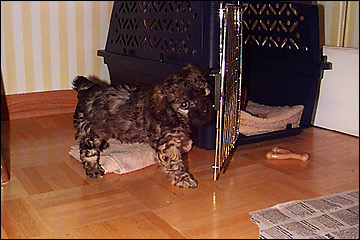
Moby protesting his crate
When he was first eating food from a dish, he was top-heavy. When he’d lean over his bowl to eat, his head would weigh him down and he’d do a face plant into his food.
About the same age, he would spend the night in a crate to help with his house training. Each morning after breakfast he’d head straight to the crate, open the door, and pull out his blanket in protest.
Moby waits patiently while we wash the dishes
When we first met Moby, he was fully black, with a splash of tan just around his eyes. His coloring was beautiful, and he seemed to lighten a bit as he grew. Then came his first haircut. The black coat was shed with his first grooming, only the black tips remaining. Everywhere else he was now a beige color.
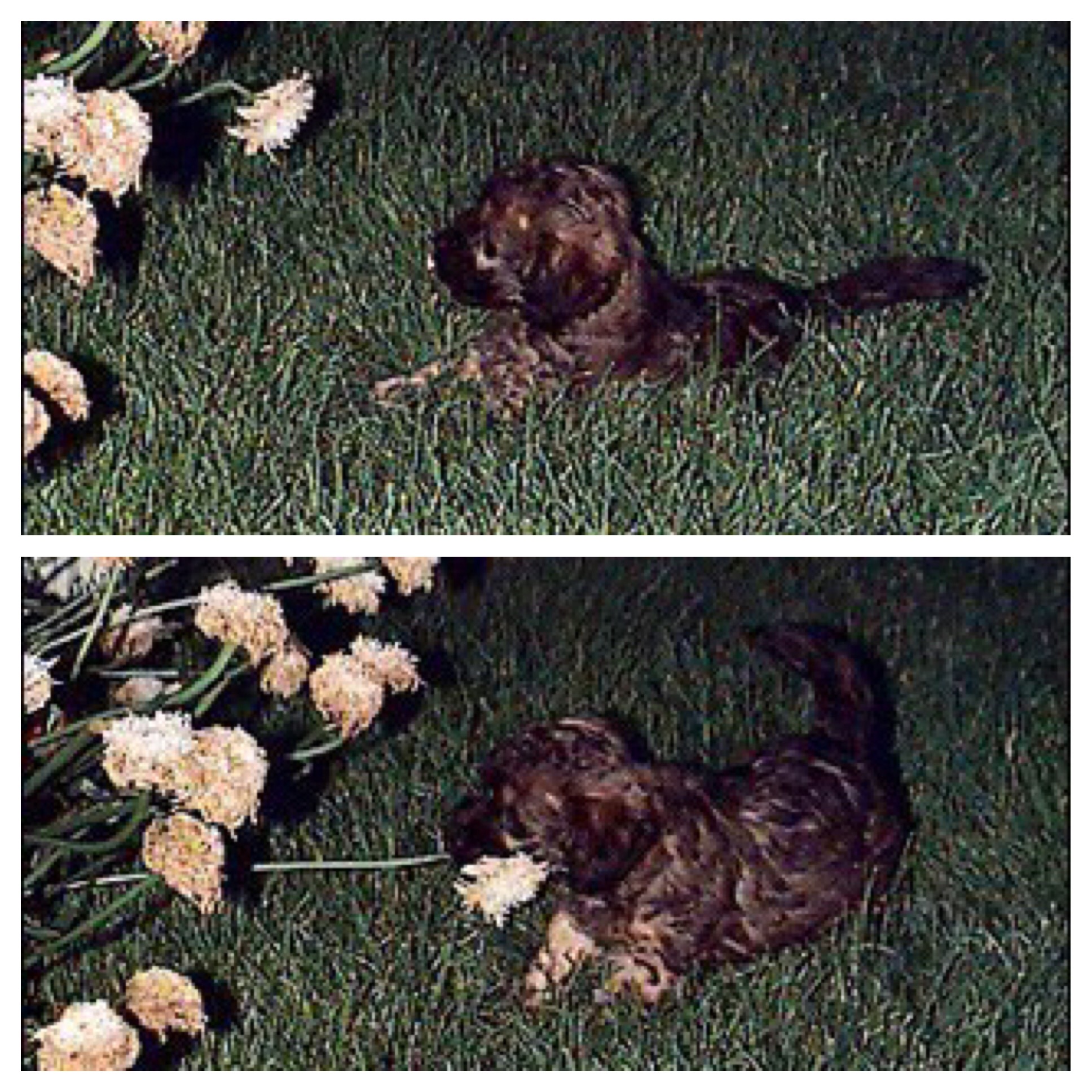
Moby attacks the flowers
Speaking of haircuts, the first time we brought him to the groomers they asked if we wanted his head rounded. Fearing he’d end up with a military-style flat top, we said yes. As it turns out, they sculpted his head into this huge helmet-shaped dome. When he came home, you could literally see the disgust on his face as we couldn’t stop laughing. Since he was part poodle, the groomers had shaped his head like a traditional poodle. We didn’t make that mistake again.
To demonstrate his fierceness, Moby would plan sneak attacks on the flowers in the yard. Seriously, they never saw it coming. He was also afraid of house flies. You could always tell when there was a fly in the house, as he’d be cowering, tail between his legs, looking for a place to hide.
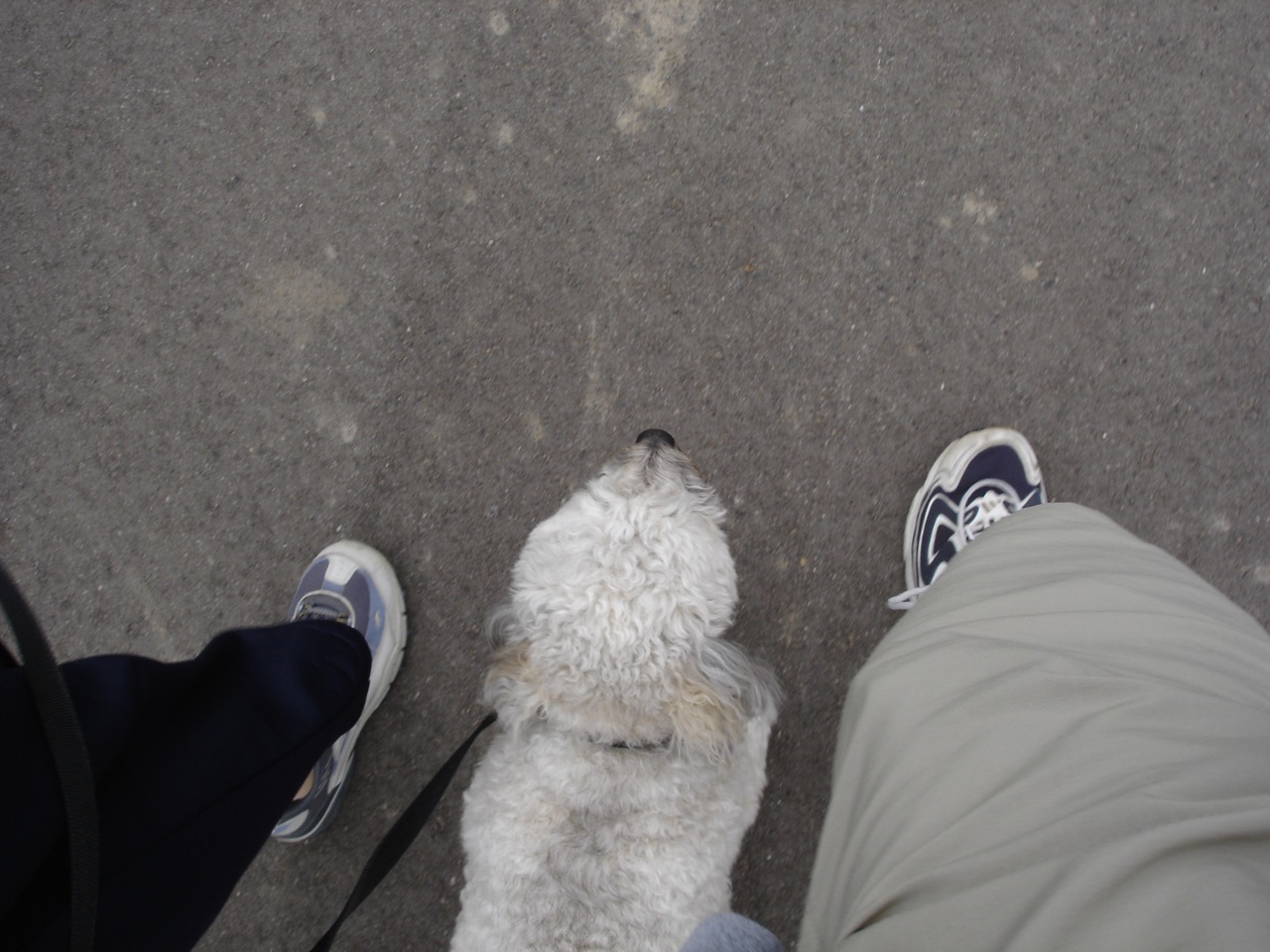
Moby always like to walk right between us
Being small in stature, Moby somehow managed to make descending a single step something of an occasion. Instead of stepping down from one level to the next, he would launch himself off the step with all four paws in the air. While taking a walk one day, going off the curb to cross the street, Moby did his usual leap. A stranger saw it from across the street and yelled over to us that it was the cutest thing he’d ever seen.
Speaking of walks, Moby loved the smells of the outdoors. Whenever he came across something good smelling (think geese poop, dried worms, rabbit pellets), he would lower one shoulder and attempt to roll in it. When he wasn’t shoulder-diving into something nasty, he would position himself right between us. He’d look around as if to say, “That’s right. We’re out on a walk, folks.”
Elevating his viewCouch adding extra height
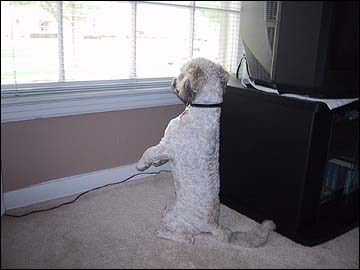
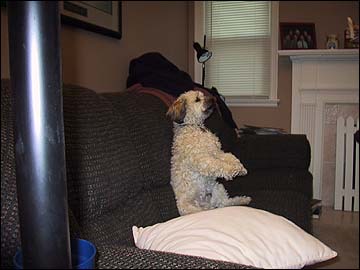
In our first house he wasn’t tall enough to see out the front window, but he wanted to keep an eye out for squirrels. To get around this he used a begging posture he’d learned as a trick to elevate his view. He’d sit on his back haunches and balance with his front paws up in the air. That gave him just enough height to keep an eye on Squirrel in the front tree. They frequently had stare-downs.
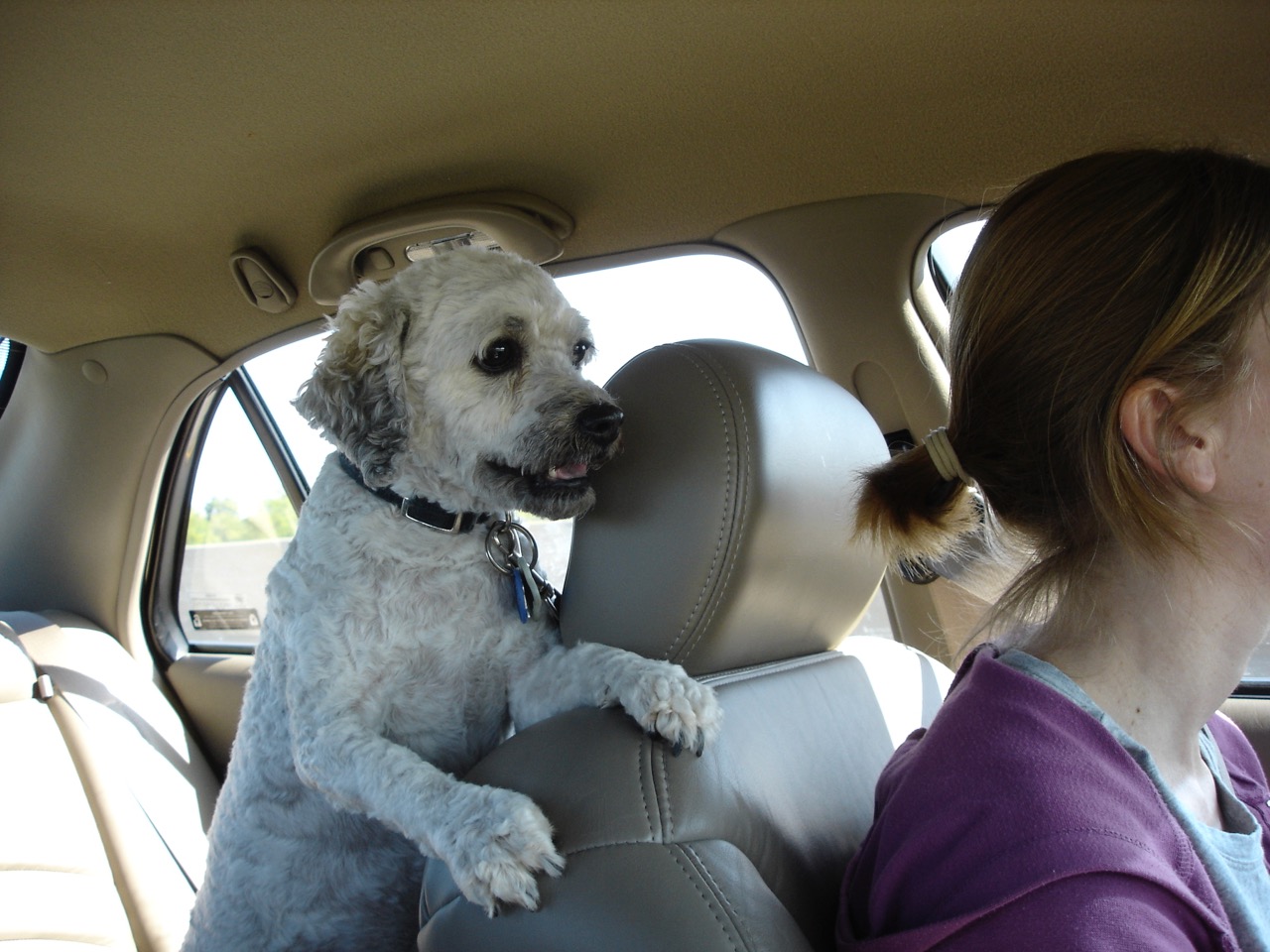
Speaking of houses, Moby was with us through every major life change: changing jobs, the family expanding, and moving 6 different times. During one move, we had a 13 hour drive between states. Moby spent the entire drive standing so he could keep an eye on things and provide input as needed.
Backseat driver
Before we had kids, we’d occasionally eat something while watching TV. During a meal of Macaroni and Cheese, Moby thought he could crawl on his belly on the floor between us and the couch, come out between us, and get our food. This became the Moby Macaroni Maneuver.
Head tilt and cat behavior
Speaking of couches, when Moby was excited about getting a treat he would climb onto the back of the couch and leap off. It was part of his pre-treat routine. That carried over into other aspects of life, when he just wanted to hang out with us, too. Thinking he was part cat, he’d hang out on the back of the couch.
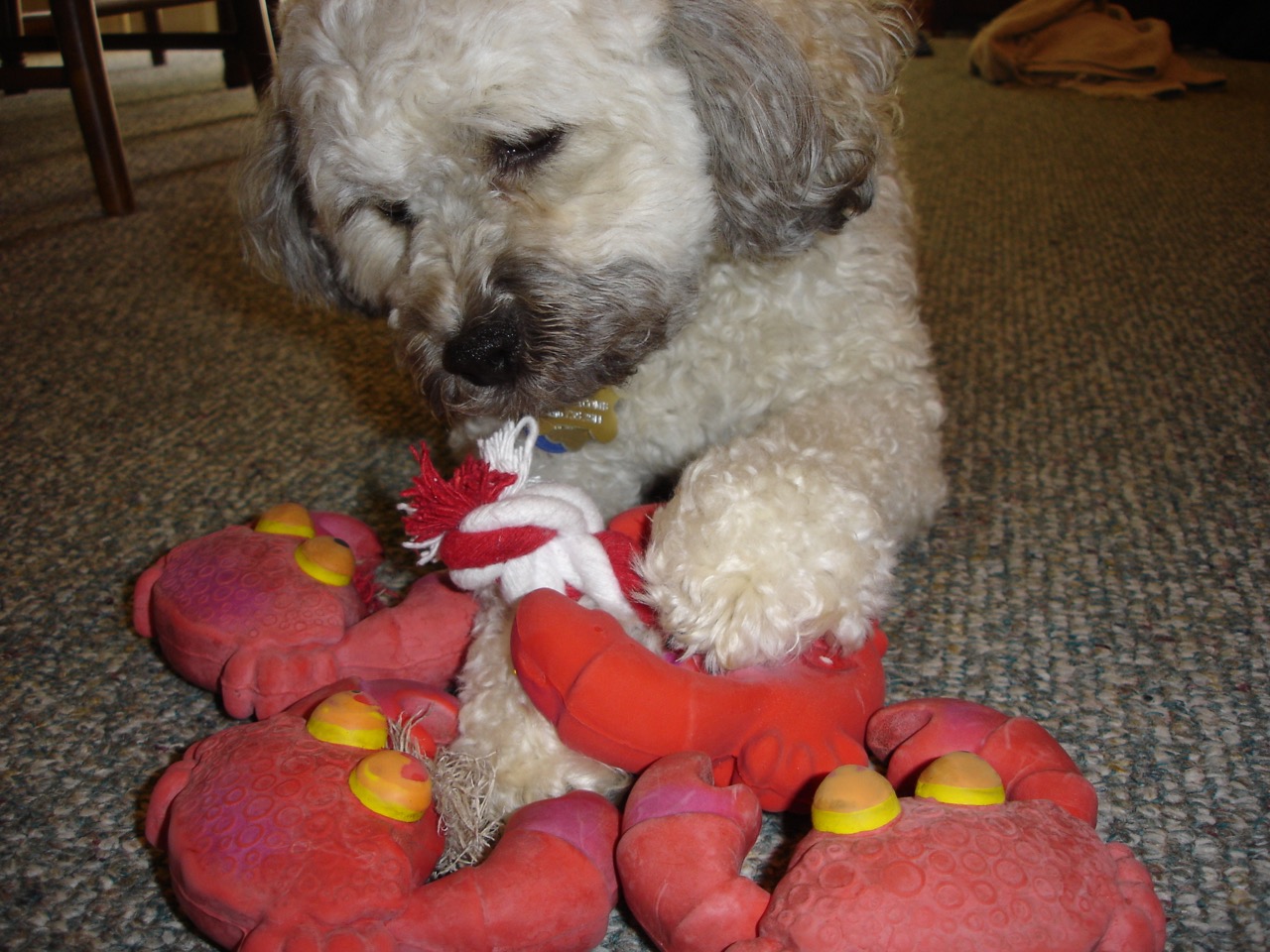
Moby and his toy crabs
Speaking of other kinds of animals, his favorite toy of all time was a squeaky crab. He’d take a hold of it with his mouth and shake it for all he was worth–over, and over, and over, until he was convinced it was dead. Oddly enough, these toy crabs didn’t last long. For fear that Meijer would stop selling them, we eventually started stocking up to make sure he never ran out. We still have a couple to this day.
One of our favorite mannerisms of Moby’s was how he’d always tilt his head sideways when hearing his name. It was as if to say, “Yes, you called?” He did that faithfully until he lost his hearing late in life.
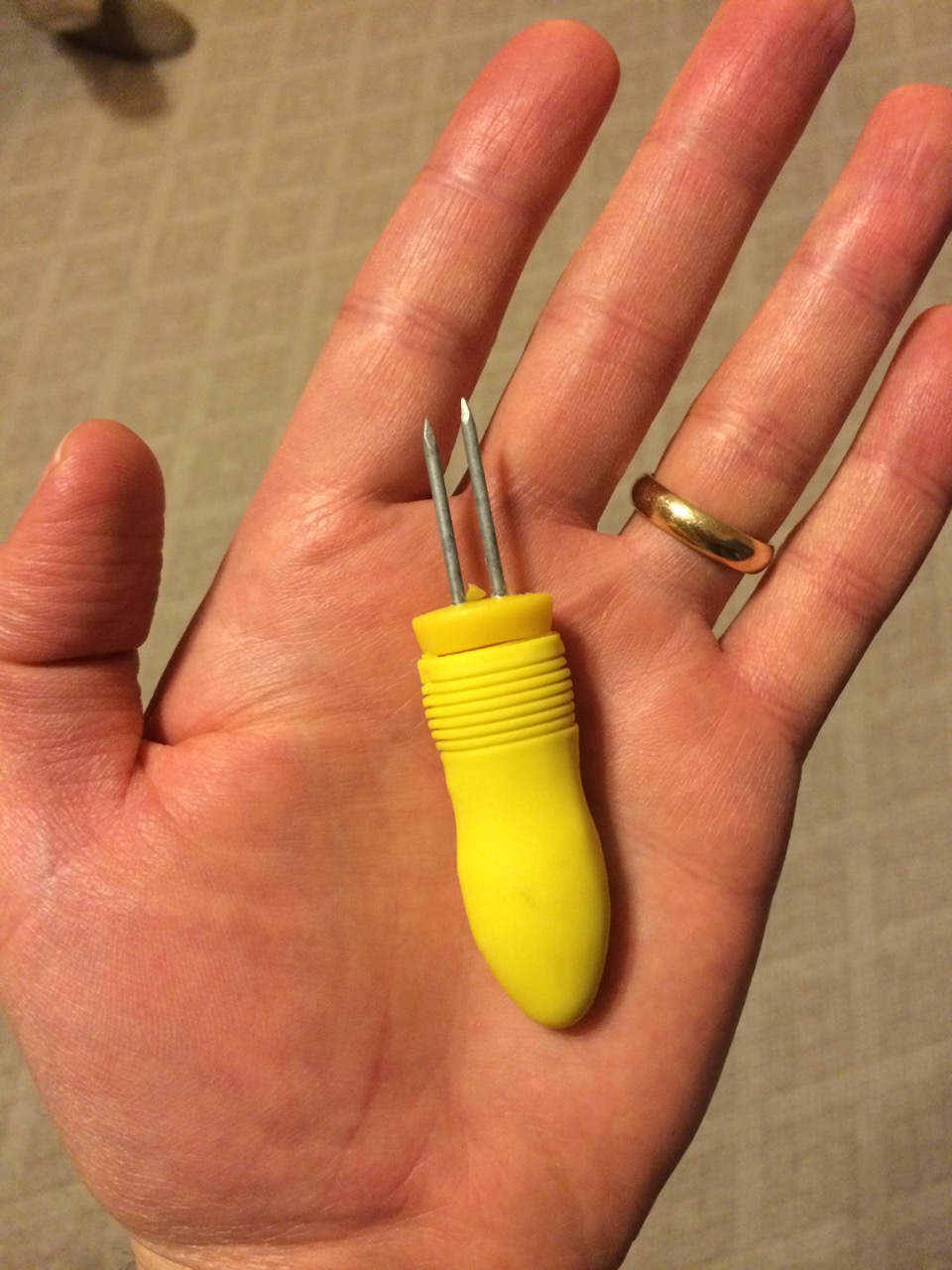
Corncob holder swallowedSurgery recovery
Speaking of health issues, he had abscessed teeth which had to be removed. He had a heart murmur that ultimately led to heart failure. He tore the ACL in his knee. The highlight had to be when he swallowed a corncob holder. At the age of 14 he had emergency surgery, and was good to go. The vet didn’t believe us and took x-rays to confirm he had actually swallowed the whole thing, spikes and all. While they were removing it, they also removed a huge hair ball from his stomach. Did I mention he sometimes acted like a cat?
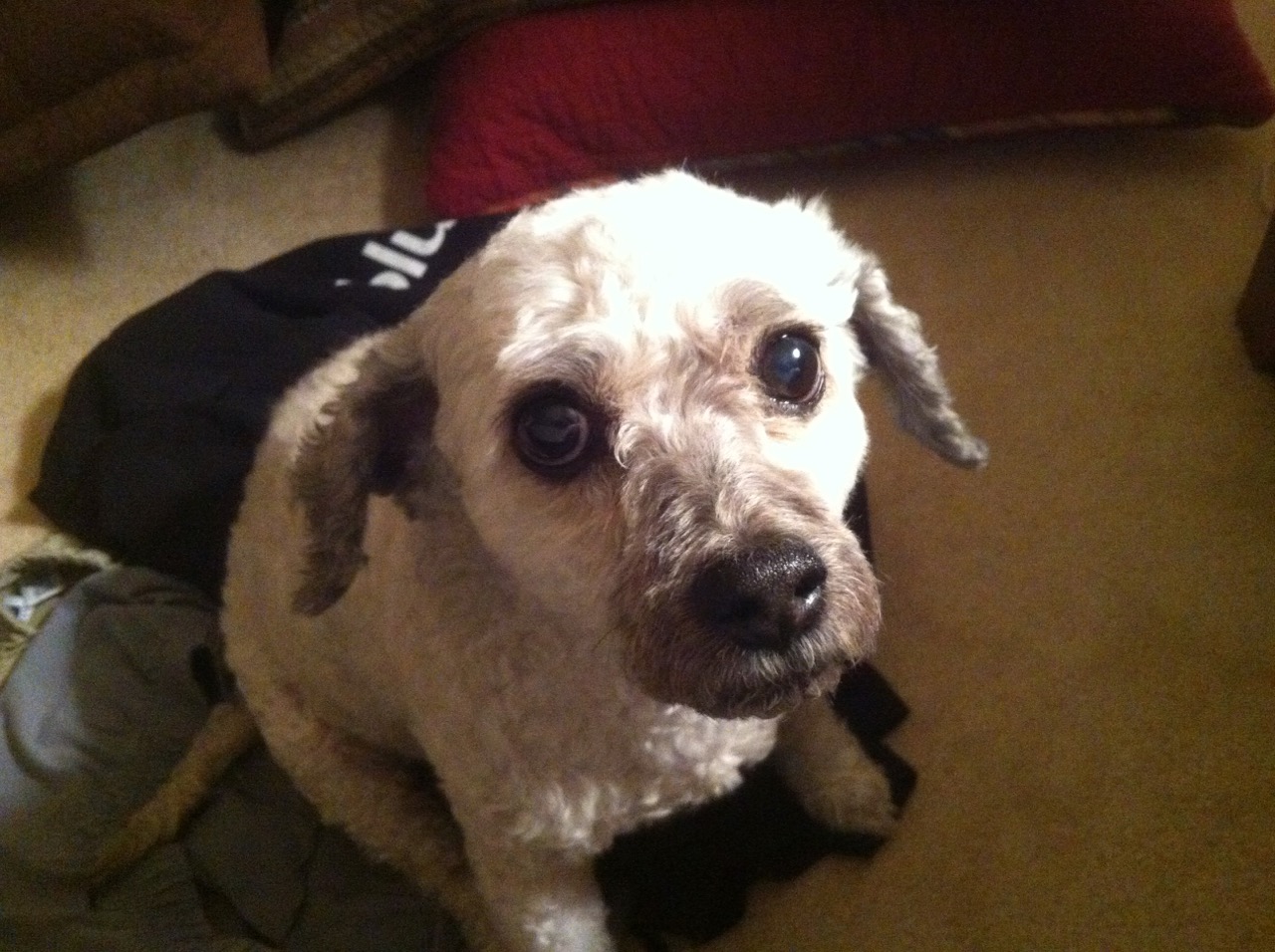
He also had skin allergies his whole life, with various treatments not doing much to help (us giving him injections, special shampoos). At one point we had him wear a white wife-beater t-shirt to keep him from scratching himself raw. Even in his health issues, he made us smile. A few months before he died, his vet’s office even referred to him as a “perpetual pup,” always bringing a smile to your face.
Tolerating the Santa hatSnow burrowing
Speaking of things we made him wear, every Christmas he donned a Santa hat and had to endure a photoshoot by the Christmas tree. He tolerated it, but his disdain was obvious.
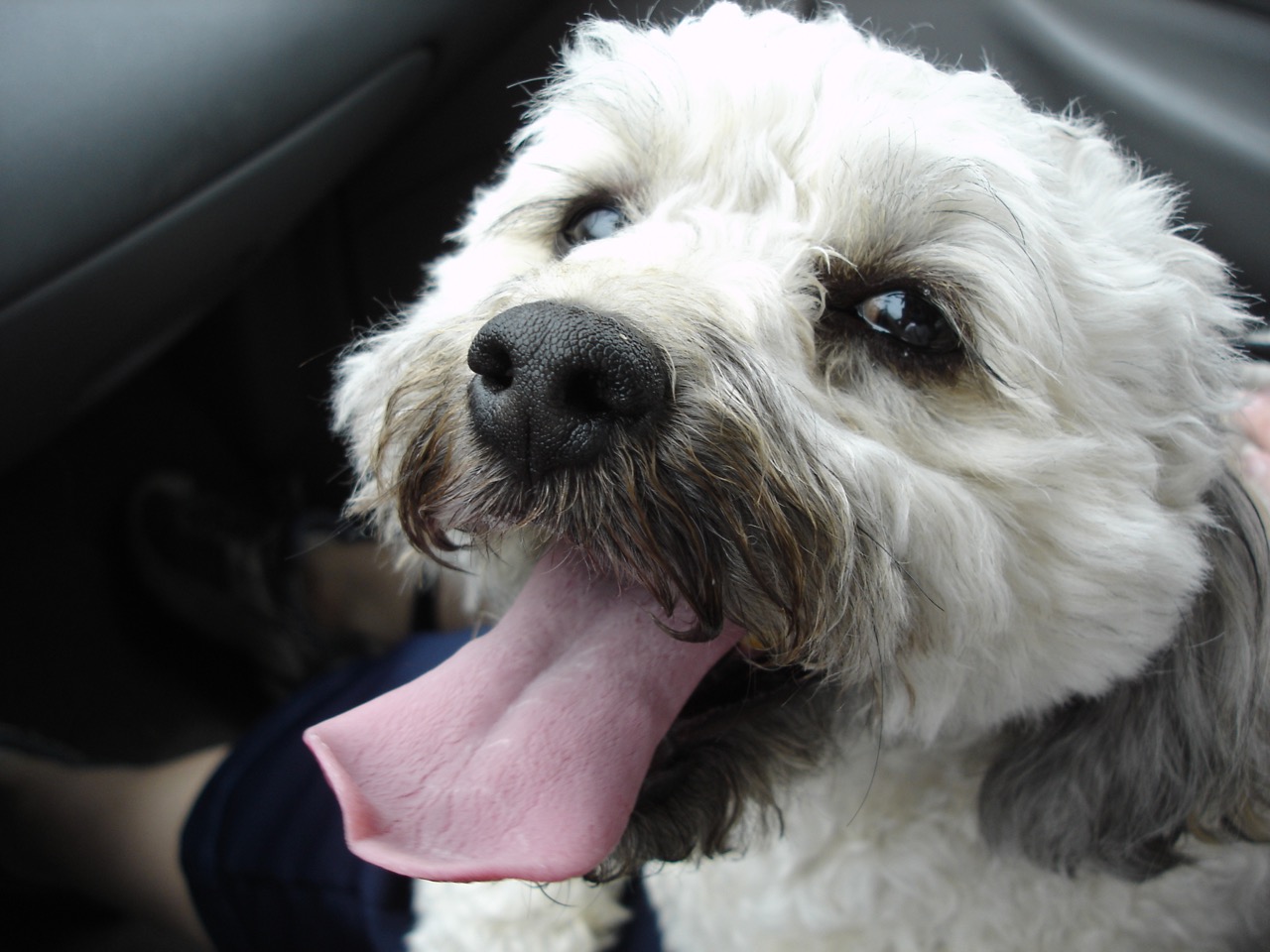
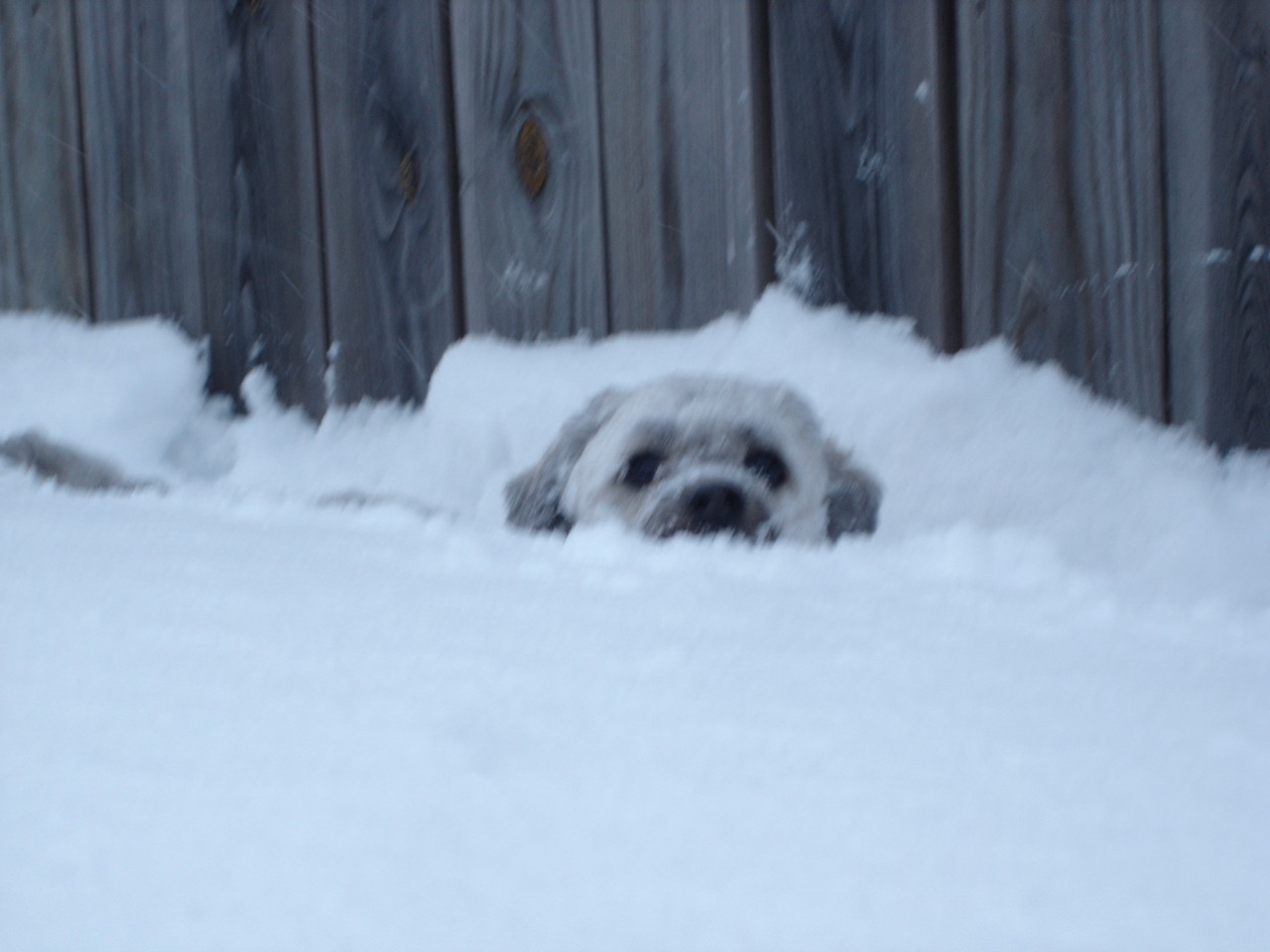
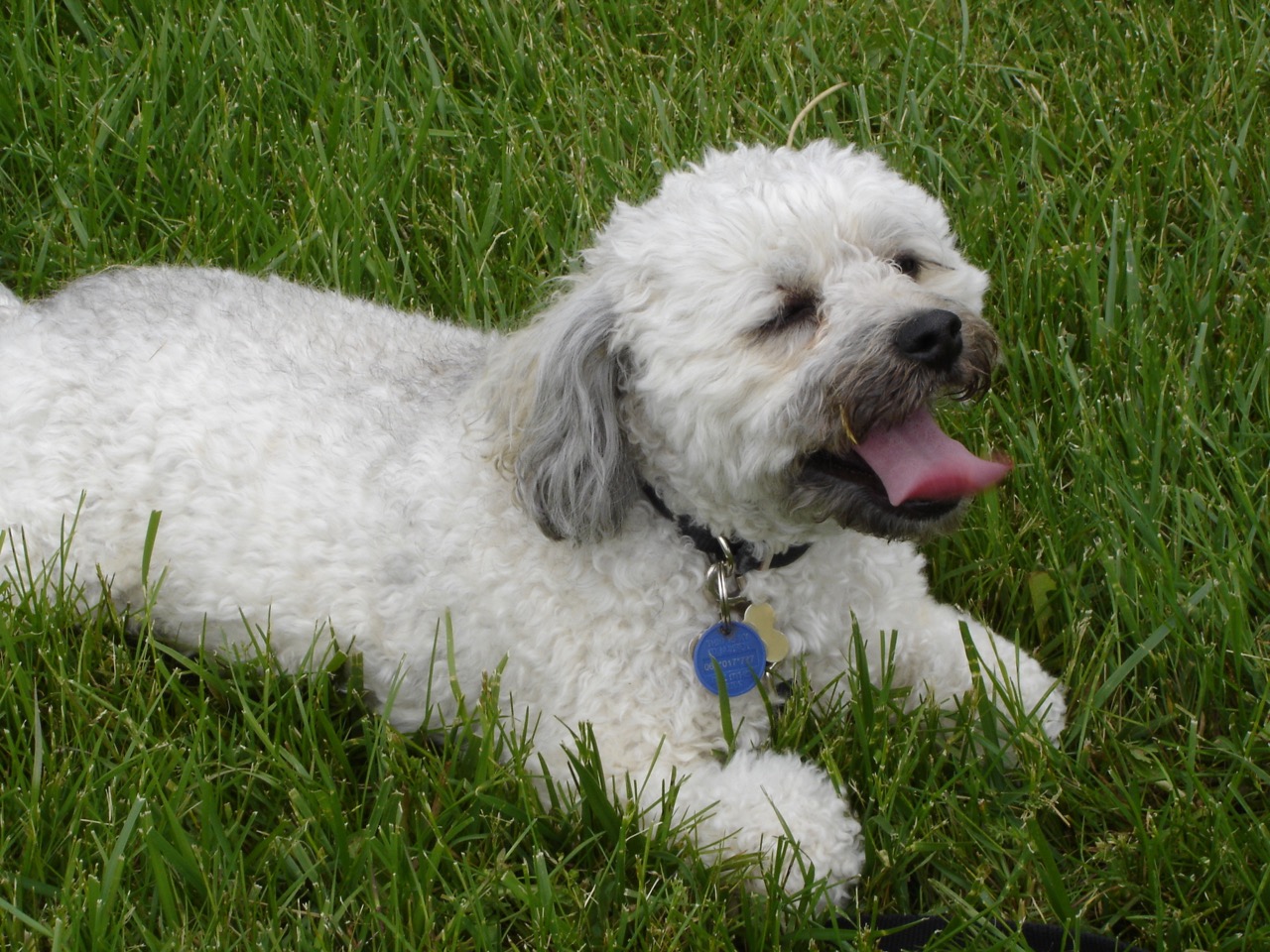
Speaking of winter, Moby loved the snow and cold more than heat. There were times he’d have to burrow through the snow it was so deep. At the other end of the temperature spectrum, when it was hot while taking walks Moby would wait until we were passing a patch of shade and would plop down in the lawn. He’d pant and smile at us, tail wagging. He’d refuse to go on.
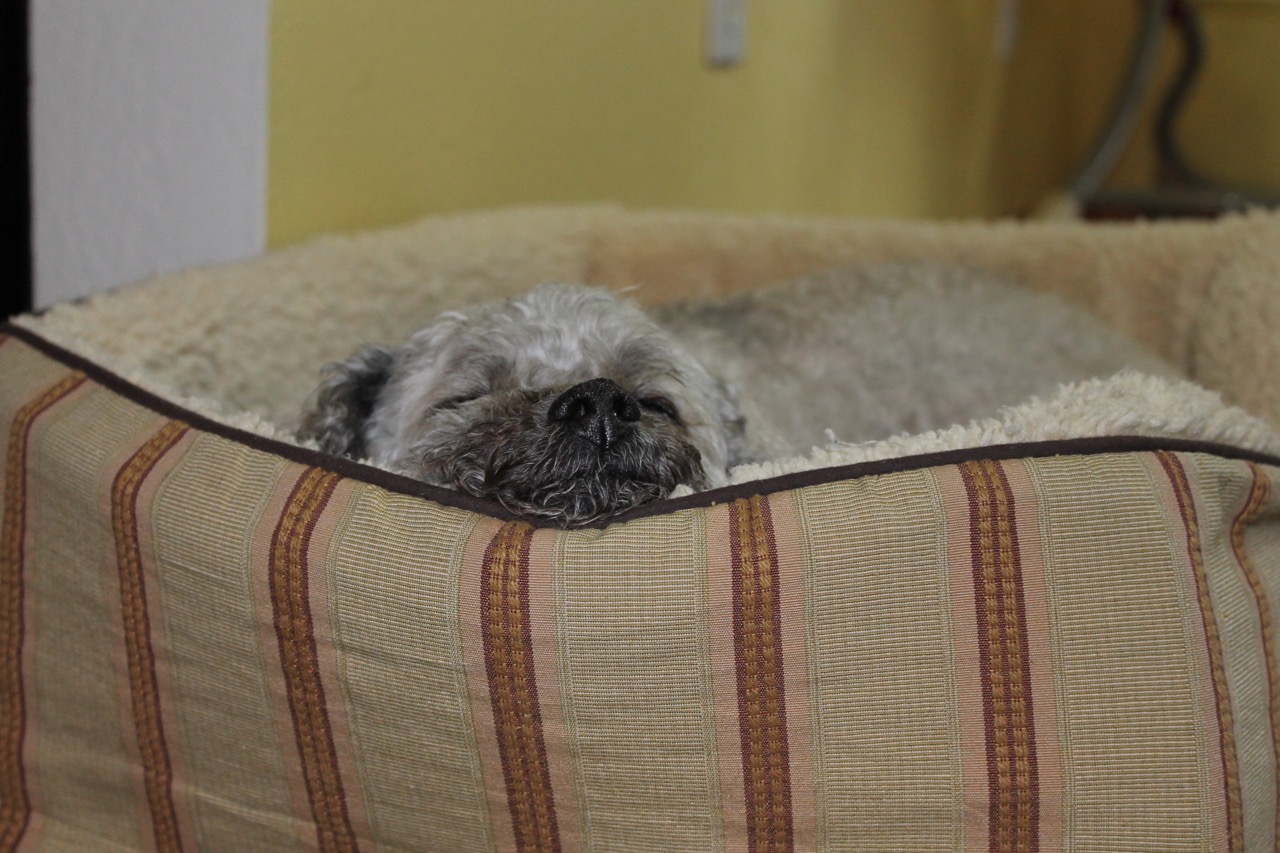
Resting in the grass
When we were saying our final good-bye to Moby, my wife used this as an analogy with the kids. She explained that his body was shutting down, and didn’t want to go on any further. I immediately pictured him sprawled on the green grass with the tongue flapping.
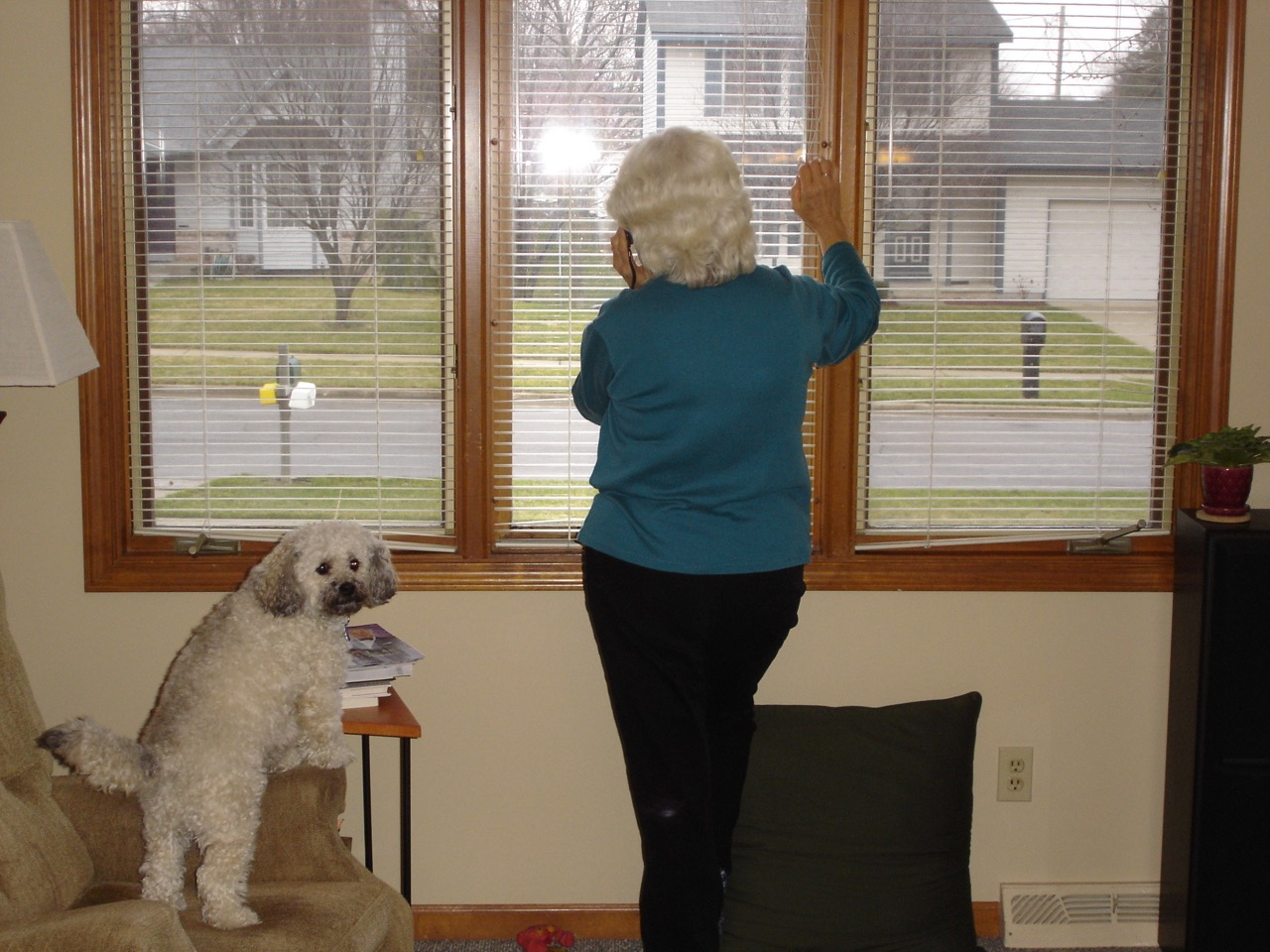
Window watching
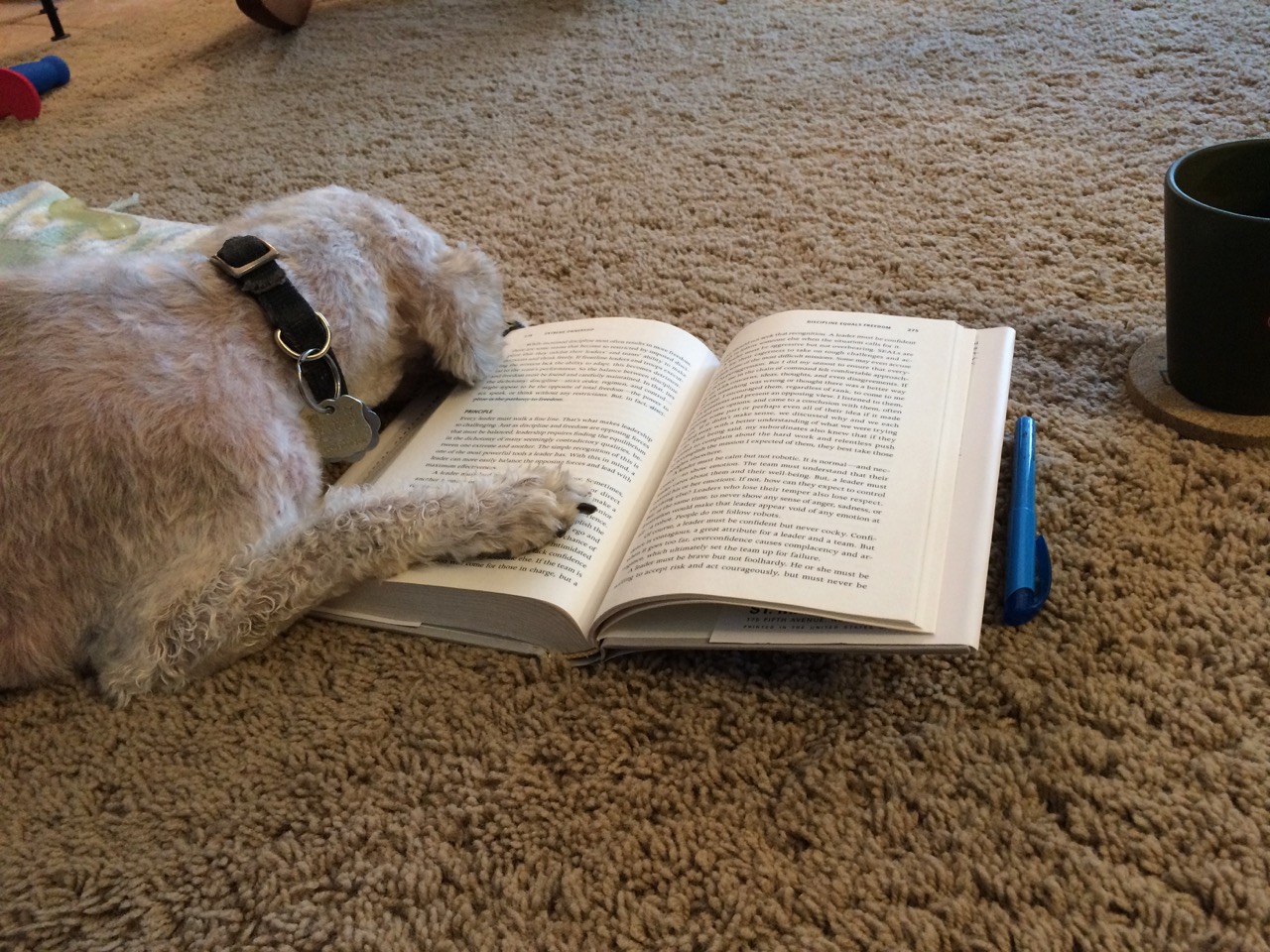
Speaking of snacks, we didn’t often (intentionally) give him people food. That didn’t stop him from trying to get some, however. One infamous tale is when he ate my mother-in-law’s special Dutch dried beef, and chewed off the corner of a recently autographed book. In Moby’s defense, they were sitting on the floor together, as if to say “eat me.” To this day, I think that was the only book he ever chewed.
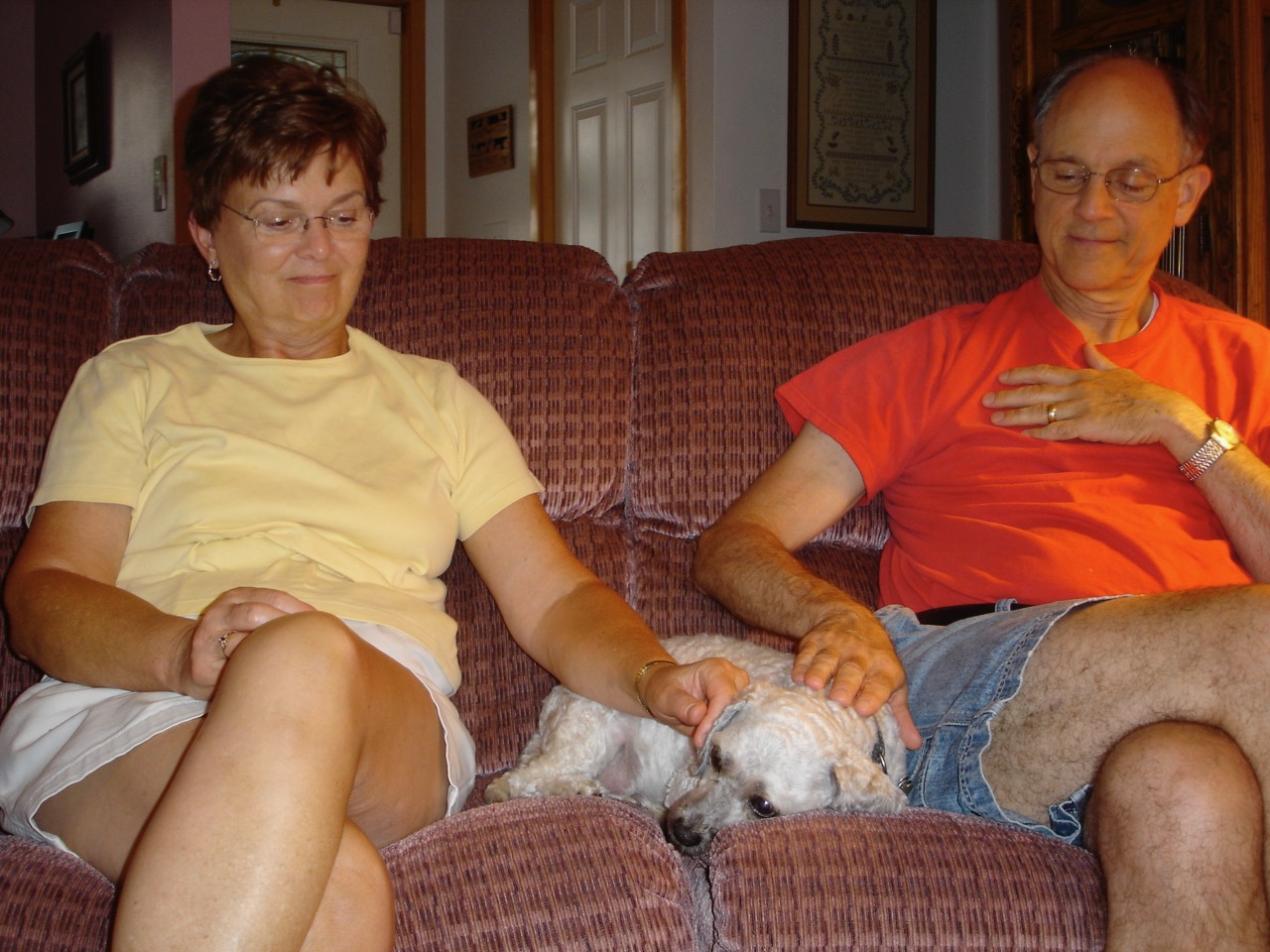
With my parents
My mother would frequently spoil him with treats and snacks. “These eggs are good for his coat” she’d say. We tried to be firm, but secretly enjoyed seeing him spoiled. On Sunday mornings, when I made eggs for the family, he’d be there beside me hoping for a drop of shredded cheese, or ham, or anything. He seemed to know when it was Sunday morning before I entered the kitchen.
He was quite adept at eating apples. He would gently nibble the apple off the core, and knew not to dig too deep. When he was younger, he’d help lick out yogurt containers after we were through. His entire face would be hidden inside the small carton. It was quite adorable.
Always with me
We often said Moby was a pup of routines. (I have no idea where he got that from.) If I didn’t wake up early enough in the morning, he’d scratch at the side of the bed to wake me up. Later in life, when he could no longer climb stairs, he’d smell the coffee first thing in the morning, timed to brew the same time I’d wake up. He’d be up and watching for me to come down the stairs, the first to greet me every day.
Requesting bedtime scratching
At night, after we got the kids in bed, he’d be standing in the kitchen waiting for us to come down. It was his favorite time of day, when he had us all to himself. He’d attempt to share our popcorn, or have a treat of his own. We’d sit on the floor together and read or watch a show, and he’d snuggle in or stand in front of me until he received a sufficient amount of attention.
Speaking of nighttime attention, for most of his life Moby slept in our bedroom. As we’d settle into bed, he’d come to my side of the bed, sit down, look up at me, and wait for me to give him a good scratching. It was his pre-bedtime massage, I guess. Many nights I was tired, or cold and wanting to stay under the covers, but then he’d look up at me with those big brown eyes. How could I resist?
Worth The Pain?
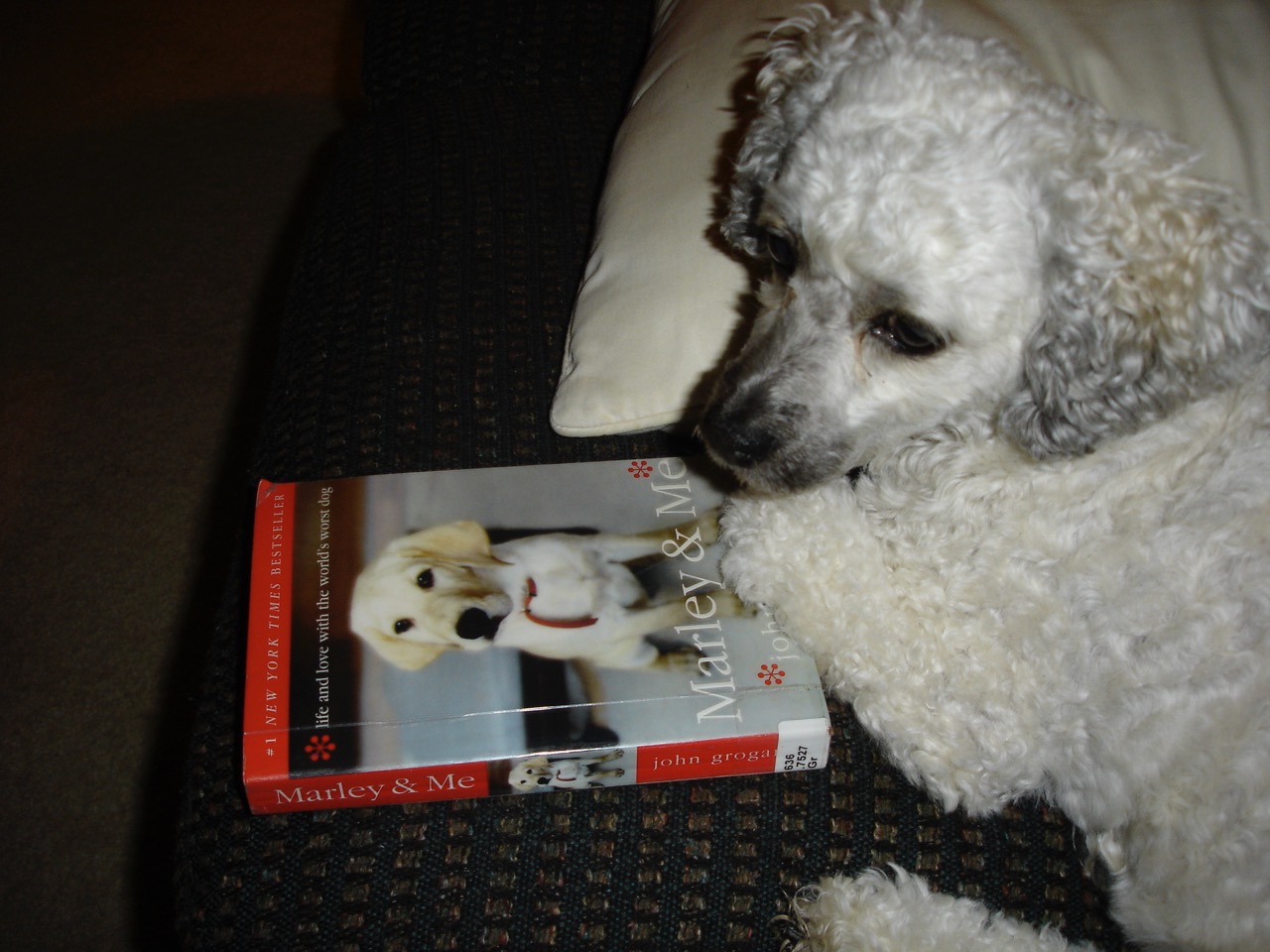
A book more similar than I ever wanted
Everywhere I go in the house now, I’m faced with the thought, “Moby would have been right here with me when I’d do this.”
Working in the office? Yep.
Cooking? Yep.
Coming home? Yep.
Waking up every morning? Yep.
Eating a meal? Yep.
Exercising? Reading? Yep, and Yep.
My sadness now could have been avoided had we never gotten Moby. But the level of pain demonstrates the absolute joy he brought to our lives, and I wouldn’t trade that for anything.
Rest well, Moby. You enriched our lives more than you’ll ever know.